By Kamran Shahid, Co-Founder of Attock Gravel Plant (established 2016), Attock, Punjab
Borewell filter gravel, also called gravel pack or filter pack, is graded granular material placed in the space between a well screen and the borehole wall. It helps hold back particles from the surrounding formation while letting groundwater enter the well. In Pakistan it is often sold as Bore Wali Bajri.
Borewell filter gravel (gravel pack, filter pack, Bore Wali Bajri) is graded gravel placed around the screened section of a borewell or tubewell. It lets groundwater flow in while helping hold back sand and silt from the aquifer. Attock Gravel Plant supplies Borewell Filter Gravel 2-8 mm, silica quartz gravel, loose in bulk at PKR 3,000 per ton ex plant, including loading, without GST or income tax. One ton is about 25 ft³ in loose bulk. The right gravel size for a well is a design decision based on the aquifer sand, the screen slot size, the bore diameter and the installation method.
- Filter gravel is one part of a designed well system. The formation, screen slot size, bore diameter and installation method decide whether a gravel size works.
- 2-8 mm is a commonly used size range and the range we supply. It is not a one-size-fits-all rule.
- Gravel helps control particles entering a well. It does not purify water or make it safe to drink.
- A basic quantity estimate needs three numbers: borehole diameter, pipe outside diameter and gravel-pack height. Treat the result as a minimum theoretical figure.
- One ton of our 2-8 mm gravel is about 25 ft³ in loose bulk, so you can turn a volume estimate into tons and a material price.
- Before you buy, ask for the material description, grading information if you need it, the quantity basis, and what the quoted price includes.
What is borewell filter gravel (Bore Wali Bajri)?
Borewell filter gravel is graded gravel placed around the screened section of a well so that water can enter while much of the surrounding sand and silt is held back. What it does in practice depends on the aquifer and on how the well was designed and built.
To see where the gravel sits, it helps to picture a borewell in plain terms:
- Borehole: the hole drilled into the ground.
- Casing: solid pipe that keeps the upper part of the hole open and separates it from surface water and shallow zones.
- Well screen: a slotted or perforated section of pipe set opposite the water-bearing layer. Water enters the well through its openings.
- Annular space (annulus): the ring-shaped gap between the pipe and the wall of the borehole.
- Gravel pack: filter gravel placed in that annular space around the screen.
In a typical gravel-packed well, the pack acts as an intermediate layer between the natural formation and the screen. The formation is usually finer than the screen openings, so the pack’s job is to bridge that gap. Whether a pack is needed at all, and how thick, graded or coarse it should be, are design decisions. Some wells in coarse formations are built without an artificial pack, while others rely on one.
Because every aquifer differs, two borewells a few kilometres apart can call for different designs. This is why the sections below separate general engineering ideas from what a supplier can confirm about a product. For a step-by-step view of the packing job itself, read our guide to gravel packing for tubewell construction in Pakistan.
Borewell gravel terminology
Trade terms vary between drillers, regions and suppliers. The definitions below are working definitions for this article.
| Term | Plain-language meaning |
|---|---|
| Gravel pack / filter pack | Granular material placed in the annular space around a well screen. Often used interchangeably, though some references use “filter pack” for the designed, graded material. |
| Bore Wali Bajri | Local trade name, roughly “borewell gravel”. Related informal terms include filter bajri, tube well bajri and well pack bajri. The exact size and material behind these names can differ by supplier, so always confirm the specification. |
| Silica gravel | Gravel made predominantly of silica (quartz). Silica is commonly preferred for filtration media because quartz is chemically stable and hard. The mineralogy of any lot should be confirmed with the supplier. |
| Annulus (annular space) | The ring-shaped gap between the well pipe and the borehole wall. |
| Well screen | The slotted or perforated pipe section that admits water and restrains the pack or formation. |
| Slot size | The width of the screen openings. It is selected together with the gravel size so the pack cannot pass through the screen. |
| Sanitary seal / grout | A sealing material, such as cement-based grout or bentonite, placed above the gravel pack to stop surface water and contaminants moving down the annulus. Gravel is not a seal. |
| Well development | Work done after construction, such as surging, bailing, air-lifting or pumping, to remove fine particles and drilling fluid residue and settle the pack so the well produces cleaner water. |
How are gravel-pack size and material selected?
Gravel-pack size is selected from the grain-size distribution of the aquifer formation, the screen slot size, the bore diameter and the installation method, not from a single fixed number. A qualified driller or hydrogeologist normally makes this decision for each site.
What factors decide the right gravel size?
- Formation grain sizeAccording to Driscoll (Groundwater and Wells, 1986), the pack is chosen from a sieve analysis of the water-bearing formation, and it is made coarser than the formation grains by a defined ratio within a uniformity limit. The ratio depends on how uniform the formation is, so take the exact multiplier from the project’s design standard or from Driscoll (see Sources).
- Screen slot sizeThe screen openings must retain the pack. A pack finer than the slots will pass through them. A pack much coarser than needed may fail to hold back formation sand.
- Bore diameter and annular thicknessA wider annular space allows thicker packs and easier placement. A very narrow annulus makes placement harder and increases the risk of voids.
- Installation methodWhether gravel is poured, tremied or placed with circulation affects how well-graded, uniform material behaves. More uniform material tends to be easier to place without segregating.
- Material qualityCleanliness, hardness, shape and mineral content all affect long-term behaviour. Soft, flaky or easily dissolving particles are generally undesirable in a pack.
Where does 2-8 mm fit?
2-8 mm is the size range of the borewell filter gravel supplied by Attock Gravel Plant, and many borewells in Pakistan use gravel in this range. That does not make it right for every well. A range this wide (the largest grains are four times the smallest) is not a narrowly graded pack. Whether your project calls for a narrower range, a finer or coarser material, or a different type of pack is a design question. If your project has a specified gravel size, compare it with the supplier’s range and ask for grading information rather than assuming a match.
Does the material matter as well as the size?
Yes. Many specifications ask for clean, hard, durable, predominantly siliceous particles with limited fines and limited soluble or reactive minerals. Our 2-8 mm borewell filter gravel is silica quartz gravel. If your specification sets limits for fines, density or other properties, ask us for the available test documentation for the lot you will receive (see Inspection and procurement).
Borewell filter gravel vs ordinary construction aggregate
Borewell filter gravel is usually specified, graded and handled as a filtration material, while construction aggregate is usually specified for strength and bulk in concrete, roads and fill. The two can overlap in size, so size alone does not tell you whether a material is suitable for a well.
| Attribute | Borewell filter gravel (Bore Wali Bajri) | Ordinary construction aggregate (crush, bajri) |
|---|---|---|
| Main purpose | Water-permeable layer around a well screen | Structural bulk in concrete, asphalt, base or fill |
| Size control | A defined grading is normally important | Grading is set by the concrete or roadwork specification |
| Fines (dust, silt, clay) | Generally kept low, because fines can enter the well | Often tolerated within construction limits |
| Mineral type | Silica or quartz is commonly preferred | Varies widely by quarry (limestone, granite, basalt and others) |
| Particle shape | Matters for placement and permeability | Often angular from crushing, which suits concrete bonding |
| Typical acceptance checks | Sieve analysis, cleanliness, material description, project specification | Concrete or road standards for strength, soundness and grading |
The table describes typical expectations, not rules. Aggregate properties vary by source and processing. The sound approach is to check the material against the project specification rather than assume that anything sold as “bajri” is suitable for a borewell.
Borewell Filter Gravel 2-8 mm from Attock Gravel Plant
The details below are the supplier’s own product information. Since our plant started, we have supplied home owners, projects, fisheries departments and water management projects.
| Item | Detail |
|---|---|
| Supplier | Attock Gravel Plant, Attock, Punjab (attockgravel.com) |
| Product | Borewell Filter Gravel 2-8 mm (gravel pack, filter pack, bore filter media) |
| Category | Borewell Gravel Pack & Filter Media |
| Size range | 2-8 mm graded |
| Material | Silica quartz gravel |
| Price | PKR 3,000 per ton, ex plant, including loading, without GST or income tax. Transport is extra. The final amount is confirmed in the quotation. |
| Volume per ton | About 25 ft³ per ton in loose bulk (approximate) |
| Supply format | Loose in bulk, no bags |
| Delivery | Arranged through independent transporters across Punjab and KPK, nationwide on request, or collect from our plant |
| Minimum order | Confirmed in your quotation, as it depends on quantity and loading |
| Test information | Our plant laboratory technicians run basic tests on each batch. Grading information and available test documentation can be shared on request, and you can send a sample to a laboratory of your choice. |
| Quotation validity | 7 calendar days from issue |
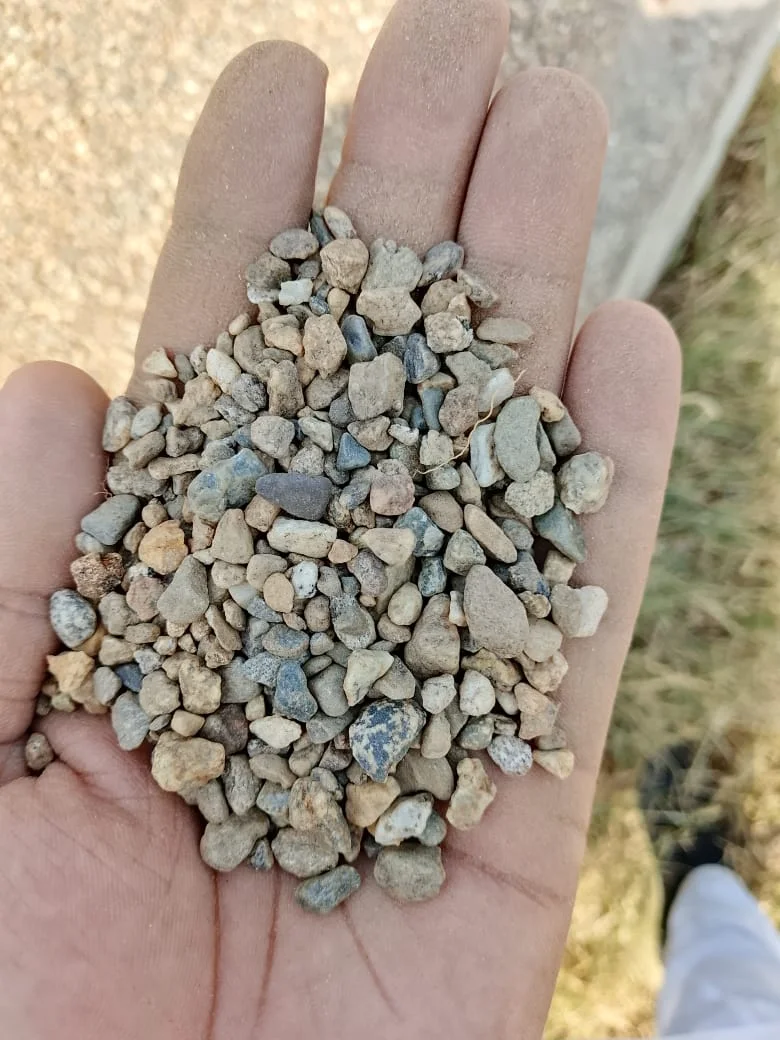
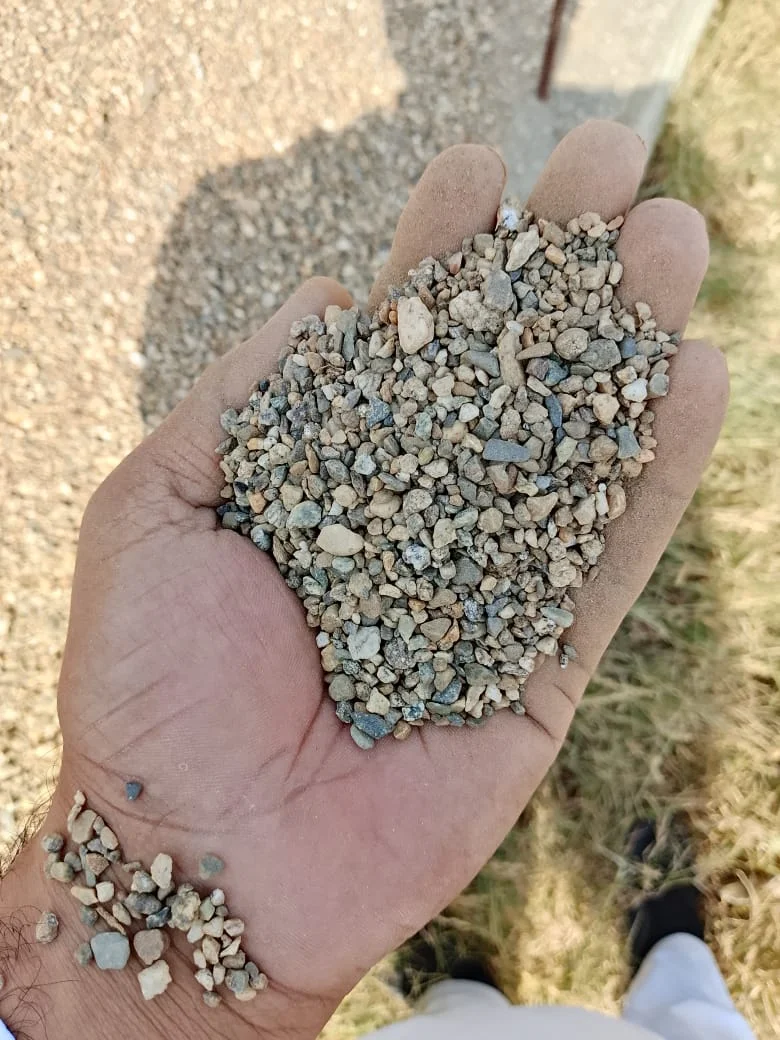
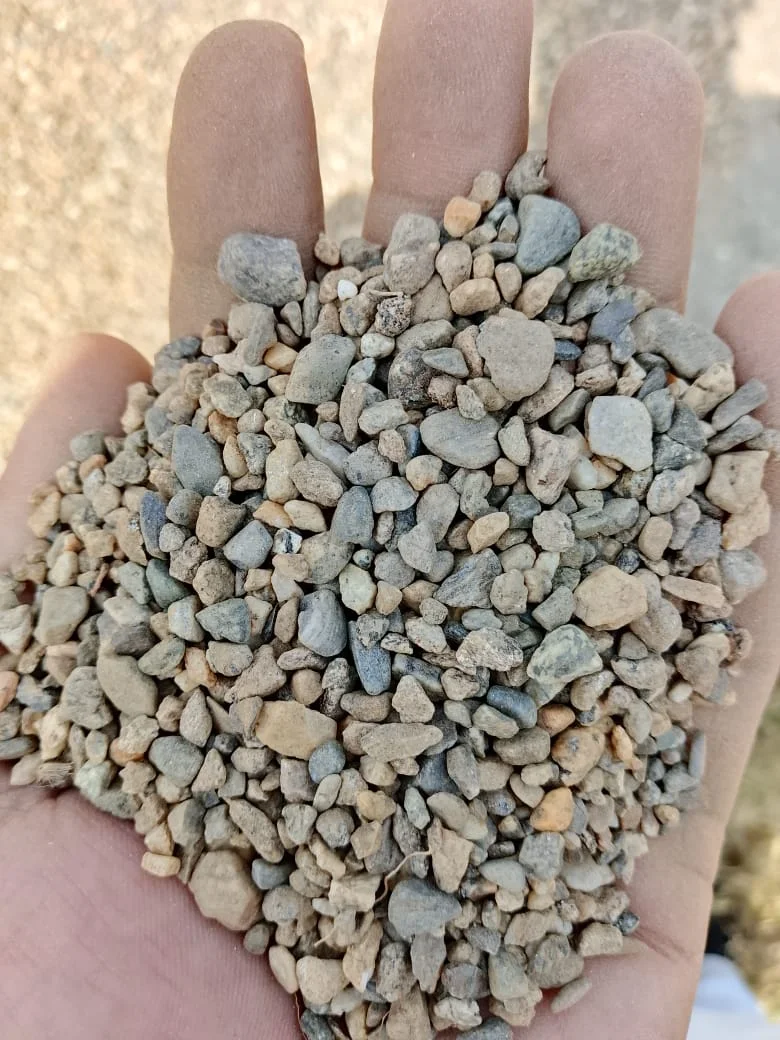
We also supply Bore Wali Bajri in 3-10 mm and 10-20 mm grades as non-calcareous pea-gravel. See Bore Wali Bajri 3-10 mm if your driller specifies rounded pea-gravel instead of silica quartz.
Common applications
Filter gravel is used wherever a screened well needs a permeable layer between the formation and the screen. Whether it suits your system depends on the design and on the project requirements.
- Domestic borewells and tube wells: houses and small buildings that draw groundwater through a screened borehole.
- Agricultural and fisheries tube wells: irrigation and farm water supply wells, where sand entering the pump can wear impellers and clog distribution equipment.
- Recharge boreholes: wells designed to return water to an aquifer, where a permeable surrounding layer is part of the design. These are specialised and usually engineer-designed.
- Water management and public-sector wells: water-supply projects that normally follow written specifications and acceptance procedures.
- Filtration uses: granular media used as part of a filter bed or support layer. Media for treatment filters has its own specifications, and a borewell pack size should not be assumed to fit it.
Our sales history shows where the material has been supplied. It is not evidence that the material will perform a given way in your well, because that always depends on the design.
Specifications, inspection and procurement
Before you order, decide what evidence you need that the gravel matches the design. For a domestic bore, a clear material description and a size range may be enough. For a tendered or public-sector project, the specification usually spells out the documents required.
Useful items to request or define:
- Material description: the type of stone or sand (for example silica quartz) and the source plant.
- Sieve analysis (grain-size distribution): shows what percentage of the material falls within each size band. It is the most direct check that a “2-8 mm” lot sits within that range.
- Cleanliness or fines limit: if your specification restricts silt, clay or dust, ask how it is measured and what information exists for the lot you will receive.
- Representative sample: a sample taken from the lot to be delivered, not only from a display pile, so any testing reflects what is supplied.
- Project acceptance criteria: tender documents, engineer’s specifications or client requirements that define what counts as acceptable.
- Quantity basis: whether the quote is by weight (for example per ton) and how weight is measured at loading.
At Attock Gravel Plant, loaded trucks are weighed, and you are welcome to inspect the material at our plant before dispatch. You can read how weighing, inspection and claims work in our Terms of Business & Supply Policies. If approval from a water authority, tender office or other body is required, confirm with that body what evidence it accepts, because requirements differ between projects.
How much gravel is needed for a borewell?
A basic estimate treats the annular space as a cylinder and multiplies its cross-sectional area by the height of the gravel pack. You need the borehole diameter, the outside diameter of the pipe and the height to be filled.
Formula in inches and feet
The constant comes from the area of a circle (π/4 = 0.7854) divided by 144 to convert square inches to square feet: 0.7854 ÷ 144 ≈ 0.005454.
Formula in metres
Worked example (illustrative only)
The assumptions below are an example, not a recommendation: borehole diameter D = 12 in, pipe outside diameter d = 6.625 in (the outside diameter of nominal 6-inch steel pipe; confirm the actual diameter of your pipe) and gravel-pack height H = 100 ft.
- Square the diametersD² = 144 and d² = 6.625² ≈ 43.89.
- SubtractD² − d² ≈ 100.11.
- MultiplyV = 0.005454 × 100.11 × 100 ≈ 54.6 ft³.
- Convert to metric54.6 ft³ × 0.0283168 ≈ 1.55 m³.
- Convert to tonsAt about 25 ft³ per ton, 54.6 ft³ ÷ 25 ≈ 2.2 tons.
| Borehole D | Pipe outside d | Gravel per foot | For a 100 ft pack | Approx. tons (25 ft³ per ton) | Approx. material cost at PKR 3,000 per ton |
|---|---|---|---|---|---|
| 12 in | 6.625 in | about 0.55 ft³ | about 54.6 ft³ | about 2.2 tons | about PKR 6,500 |
| 16 in | 10 in | about 0.85 ft³ | about 85.1 ft³ | about 3.4 tons | about PKR 10,200 |
The cost column is ex plant, before transport and tax, and it uses the theoretical volume without any allowance.
Limits of this estimate
This is the theoretical volume of a perfect cylinder. The actual quantity can differ because of washouts and over-sized sections, caving, irregular bore walls, material settling and how the gravel is placed. Many drillers and designers add an allowance, but the right allowance is a project decision.
Gravel is sold by weight, per ton, in loose bulk. As a working figure, one ton of our 2-8 mm gravel occupies about 25 ft³ (about 0.7 m³) in loose bulk. The figure is approximate, so the quotation confirms the weight. Divide your volume in ft³ by 25 to get an approximate number of tons, then add the allowance your designer recommends. You can also send us your bore diameter, pipe outside diameter and pack height, and we will help you estimate the quantity.
Installation overview
Gravel-pack installation is a specialist task that should follow the project design and be carried out by a qualified drilling professional. This section is a general orientation, not an installation procedure.
In broad terms, a gravel-packed well is built in stages: the borehole is drilled and conditioned, the casing and screen assembly is set at the designed depth, filter gravel is placed in the annulus around the screen, a seal is placed above the pack to protect against surface and shallow contamination, and the well is then developed to clear fine particles and settle the pack.
How far the pack extends above the screen, how the gravel is introduced, what type of seal is used and how development is carried out depend on the aquifer, the well depth, local practice and the project specification. Refer these to your designer or driller. According to its scope, ANSI/AWWA A100 (Water Wells) covers gravel packs, seals and development in detail (see Sources), and our guide to gravel packing for tubewell construction describes the usual steps and common mistakes.
Supply from Attock and regional considerations in Pakistan
Attock Gravel Plant is based in Attock, Punjab, and supplies bulk material to customers across Pakistan, subject to order size, transport availability and destination access. We do not run our own delivery fleet. You can arrange your own transport and collect from the plant, or we can coordinate independent transporters, with freight agreed before dispatch.
Groundwater conditions across Pakistan vary considerably, so no single gravel size or design suits every region or aquifer. Alluvial plains, piedmont zones, river terraces and rocky areas can all produce different formation sizes and water-quality issues. For any city or district, rely on local drilling experience, well logs from nearby wells and advice from a hydrogeologist or experienced driller.
Remember also that water-quality problems such as salinity, arsenic, fluoride or microbial contamination are not solved by a gravel pack. Where drinking-water safety is a concern, water testing and appropriate treatment are separate steps, and a sanitary seal and good wellhead protection address surface contamination routes.
Buyer’s checklist
Use these questions when you request a quotation or compare suppliers.
Product
What is the exact size range, and is grading information available for the lot to be supplied? What is the material and the source plant?
Documents
What test information or material description can be provided in writing? Does your project specification require any approval, and who issues it?
Quantity and price
Is the price per ton, and how is weight measured at loading? Is it ex plant, does it include loading, and are taxes included or excluded? How long is the quotation valid?
Delivery
Is delivery available to your location, and what is the transport cost? Is supply loose bulk, and can you receive and handle it at your site?
Simple checks, such as rubbing gravel between your fingers or shaking it in a jar of water, may show obvious dust or clay, but they are not substitutes for laboratory tests or for project acceptance procedures.
Frequently asked questions
What is Bore Wali Bajri?
Bore Wali Bajri is a local trade term for gravel used around the screened section of a borewell or tube well. The exact size, material and cleanliness vary by supplier, so confirm the specification of the lot you are buying.
What does 2-8 mm mean?
It means the gravel sits between roughly 2 mm and 8 mm in particle size. A sieve analysis shows how much of a particular lot falls within that range. It is a commonly used size range, not a universal standard for borewells.
How is the right gravel size selected?
It is selected from the aquifer’s grain-size distribution, the screen slot size, the bore diameter and the installation method. A driller or hydrogeologist normally makes this decision for each site.
Is 2-8 mm suitable for every borewell?
No. Suitability depends on the formation and the screen design. Check the range against your project specification or your driller’s advice.
How much gravel do I need for a borewell?
Estimate the annular volume with V (ft³) = 0.005454 × (D² − d²) × H, using borehole diameter D and pipe outside diameter d in inches and pack height H in feet. Then divide by about 25 ft³ per ton to get approximate tons of our 2-8 mm gravel. Actual quantity can vary with washouts, caving and placement, so treat the figure as theoretical.
How many cubic feet are in one ton of 2-8 mm borewell gravel?
One ton of our 2-8 mm borewell filter gravel is about 25 ft³ (about 0.7 m³) in loose bulk. The figure is approximate, and the quotation confirms the weight.
How is borewell gravel different from construction aggregate?
Filter gravel is chosen for permeability and particle control around a screen, while construction aggregate is chosen for strength and bulk. Their sizes can overlap, but suitability depends on grading, cleanliness and the project specification.
What is the price of borewell filter gravel 2-8 mm per ton?
Our ex-plant price for Borewell Filter Gravel 2-8 mm is PKR 3,000 per ton, including loading, without GST or income tax. Transport is extra, and the final amount is confirmed in a quotation valid for 7 days.
Is the gravel supplied in bags?
No. Attock Gravel Plant supplies Borewell Filter Gravel 2-8 mm loose in bulk, loaded directly into your truck at the plant.
Does Attock Gravel Plant deliver?
We do not run our own delivery fleet. Delivery is arranged through independent transporters across Punjab and KPK, nationwide on request, or you can collect from our plant. Freight is agreed before dispatch.
What documents should I ask for?
Ask for a written material description, grading information if your project needs it, and confirmation of any project-specific acceptance criteria. We can share available test documentation on request, and you can send a sample to a laboratory of your choice.
Does filter gravel make water safe to drink?
No. Gravel helps control particles entering a well but does not remove dissolved contaminants or pathogens. Water testing, sanitary well construction and appropriate treatment are separate matters.
Request a quotation
Planning a borewell or tube well? We can prepare a current quotation for 2-8 mm borewell filter gravel. It helps to have these ready: borehole diameter and pipe outside diameter, planned gravel-pack height or your estimated quantity, required size range or project specification, delivery location, and whether you need loading at the plant.
Request a Quote WhatsApp +92 313 7523006 View the productSources and further reading
- Driscoll, F. G. (1986). Groundwater and Wells (2nd ed.). Johnson Filtration Systems. A widely used reference on well design, including gravel-pack and screen selection.
- American Water Works Association. ANSI/AWWA A100, Water Wells. Standard covering well design and construction, including gravel packs, seals and development.
- National Ground Water Association (NGWA) and national or provincial water-authority guidance on well construction, where applicable to your project.
More from the Knowledge Centre
-
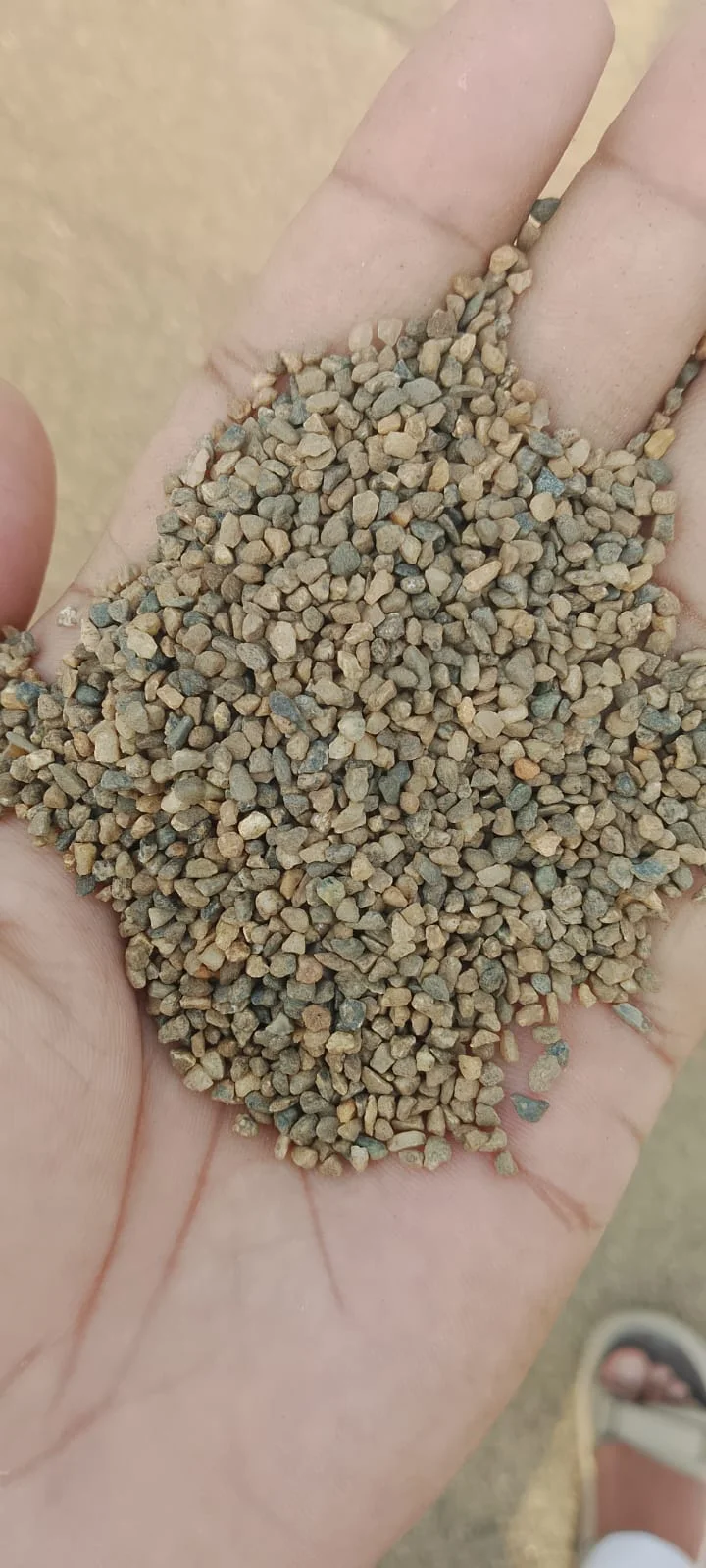
Non-Calcareous Gravel 4-6mm in Pakistan: Specs, Acid Test and Price
Non-calcareous gravel 4-6mm in Pakistan: specification, sieve and 24-hour acid solubility tests, comparison with limestone crush,…
-
Padel Court Silica Sand in Pakistan
Padel court silica sand 0.2-0.8 mm in Pakistan: bulk supply from Attock, grain size vs datasheet,…
-
Silica Sand for Sandblasting: Choosing Between 8-16, 10-20 and 30-40 Mesh
Compare 8-16 and 10-20 mesh silica sand for sandblasting: grain size, cutting speed, surface finish, dust…
-
Silica Sand Mesh Sizes Explained: Which Mesh for Sandblasting, Filtration and Granules
A plain-language guide to silica sand mesh sizes: what 4-8, 8-16, 10-20 and 16-30 mesh mean…