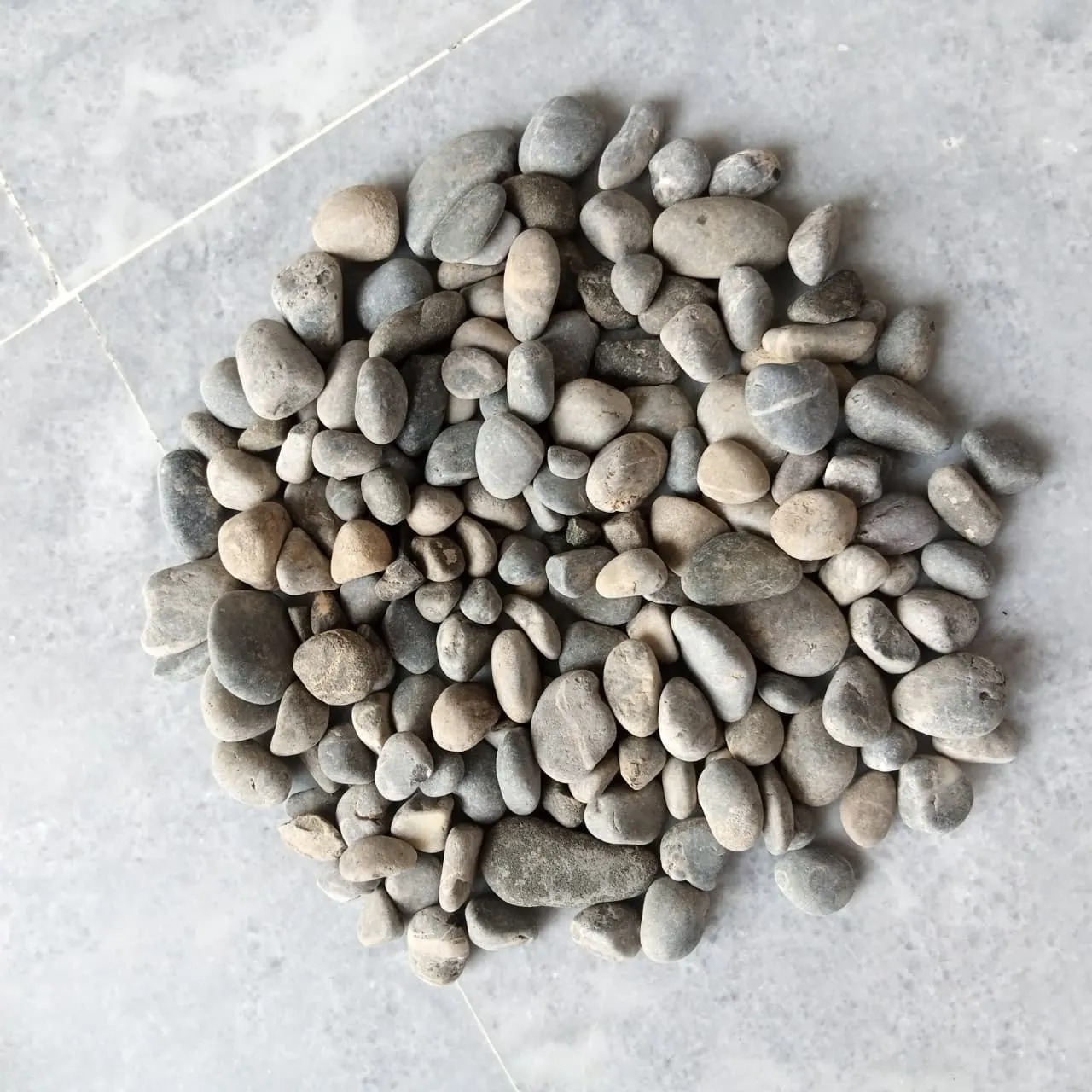
Gravel packing is the layer of clean, graded, rounded gravel placed between a tubewell’s screen and the borehole wall. It holds the aquifer in place, filters out fine sand and lets water flow in freely. In water boring in Pakistan, it is one of the cheapest parts of the job and one of the most expensive to get wrong.
A badly packed well can pump muddy water, wear out the pump and need to be redrilled. This guide explains how borewell packing gravel is chosen and installed, which sizes are used in Pakistan, how to calculate the quantity you need, and what decides the cost of the material. It is written by the team at Attock Gravel Plant, which grades and supplies pea-gravel (Bore Wali Bajri) directly from its own plants.
Final design always rests with your borewell designer or engineer, who knows the geology at your site. Use this guide to understand the choices, not to replace the survey.
What is gravel packing and why does it matter in water boring?
When a tubewell is drilled, the screen (the slotted pipe section) is lowered into the water-bearing layer. If the surrounding formation is fine sand, the slots would either clog or let the sand flow through with the water. Gravel packing solves both problems. The gravel fills the space around the screen and does three jobs:
- Stabilises the aquifer wall so the borehole does not collapse onto the casing.
- Acts as a filter that stops fine sand from entering the screen while letting water through.
- Increases the effective radius of the well, so water enters more easily and the well can deliver more.
A good pack also protects the submersible pump. Sand pumped with the water scours the impellers and can lock the pump, so a correct gravel pack extends pump life.
Natural pack and artificial pack
The aquifer is the filter
The aquifer itself is developed so the finest grains are washed out and the coarser grains form the filter.
Used for: coarse, clean and uniform formations.
Gravel is placed from the surface
Graded gravel is placed around the screen from the surface.
Used for: fine or uneven sand, which is common at many tubewell sites.
Which gravel size is used for borewell packing in Pakistan?
The size of gravel used in borewell packing typically ranges from 2 mm to 8 mm, depending on the grain size of the surrounding aquifer sand. It is known by many names: pea gravel, zero size bajri, Bore Wali Bajri, packing gravel, pebble stones, or Gita in Punjabi. In Pakistan, 2 mm to 8 mm is the size most commonly used.

Different jobs use different sizes:
| Application | Usual gravel size |
|---|---|
| Most common borewell packing | 2 mm to 8 mm |
| 16 in bore with 10 in casing (the most common borewell in Pakistan) | Normally 2 mm to 8 mm |
| 2 ft to 3 ft bores | Normally 8 mm to 1.5 in |
| Some filtration plants | 1 mm to 4 mm |
| Other designs | 0.5 in to 1.5 in or 0.5 in to 2 in |
Sizes can also be made for 3 ft, 2 ft, 18 in and 10 in borewells and for rainwater harvesting wells. The final grade is for the borewell designer or engineer to decide, based on the geological survey, land condition, depth and water level.
How designers match gravel to the aquifer sand
A widely used guideline is that the gravel should be roughly four to six times coarser than the aquifer sand. To apply it, drillers collect samples of the sand at the depth of the screen and run them through a set of sieves. The grain size at which about half the sample passes (D50) is multiplied by four to six to get the target gravel size. The screen slot is then chosen so it holds back most of the gravel. This is why one size never suits every site, and why a sand sample is worth more than any rule of thumb.
What makes good filter gravel?
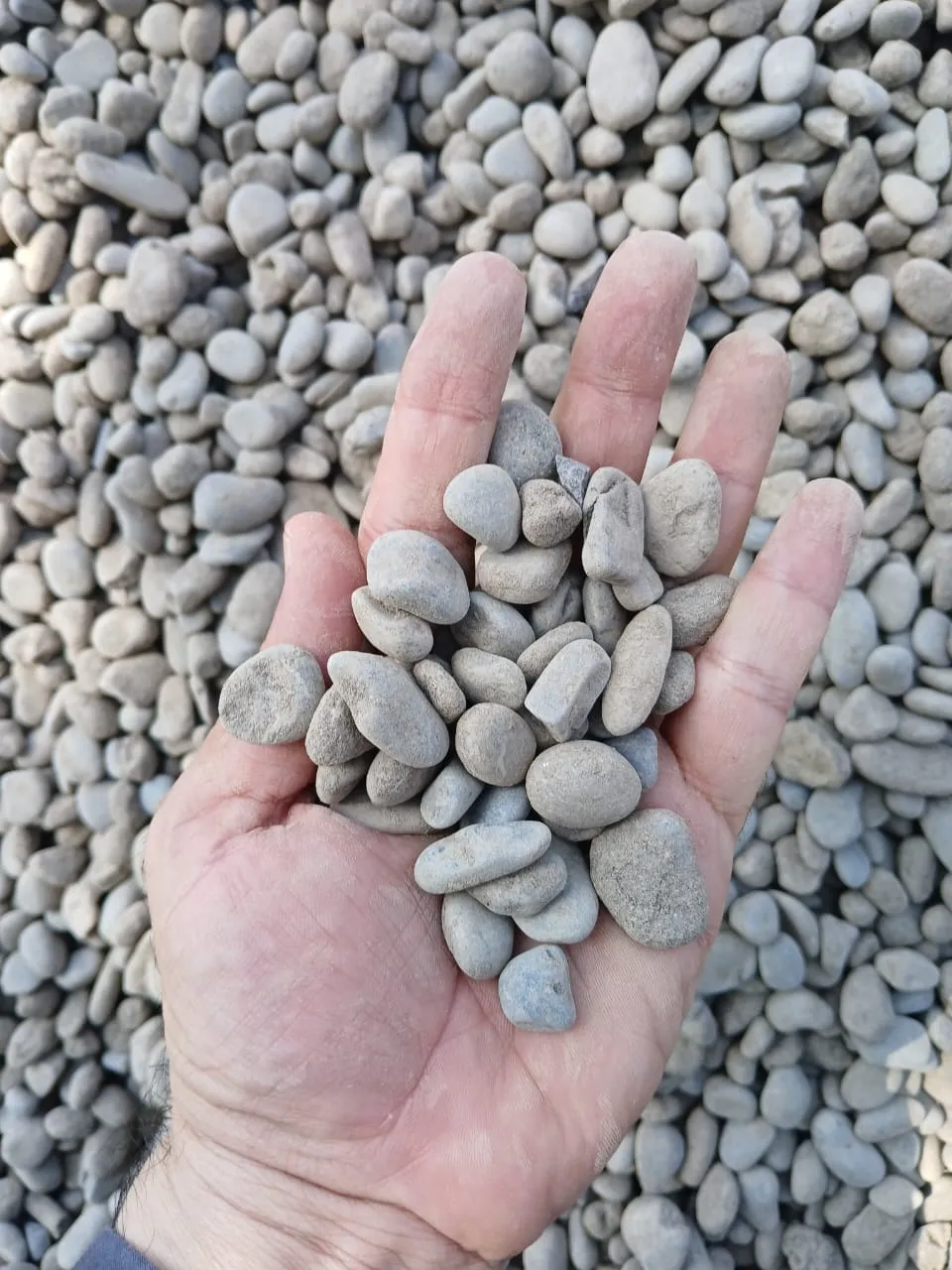
Rounded, not sharp
This is the point most buyers miss. At Attock Gravel, non-calcareous P-gravel means gravel with no sharp edges. Rounded stones leave open gaps between them, so water passes through easily. Gravel with sharp edges interlocks, blocks the passage of water and can damage the casing pipe. This is why our pea-gravel is 100% natural and not crushed.
Clean and uniform
Good packing gravel is free of clay, mud, shale and organic matter, and its grains are close in size. Dirty or mixed gravel clogs the pack and makes the well harder to develop.
Hard, silica-based material
The gravel stays in the ground for the life of the well, so it must be hard and stable. Our pea-gravel comes from the Lawrencepur silica sand deposit in Attock, where natural pebble stones are separated from the sand in our graders.
Ordinary crushed construction aggregate is cheap, but it is angular and often dusty. Using it around a screen is a common false economy. It locks together, restricts flow and can scratch the casing, and the saving on material is lost the first time the well must be cleaned or redone.
How thick should the gravel pack be?
The thickness is the distance between the screen and the borehole wall. A commonly quoted guideline is a minimum of about 3 inches (75 mm), with around 8 inches (200 mm) as a practical maximum. A pack that is too thin can allow sand to break through. One that is too thick makes the well hard to develop. A 16 in bore with a 10 in casing leaves a 3 in annular space, which is why that pairing is so common.
How to calculate the gravel quantity for a tubewell
The gravel fills a ring-shaped space, so the volume is the area of that ring multiplied by the length to be packed:
Worked example
For a 16 in bore with a 10 in casing, R = 8 in and r = 5 in. The ring area is π × (64 − 25) = about 122.5 square inches. Over one foot (12 in) of length, that is about 1,470 cubic inches, or roughly 0.85 cubic feet (cft) per foot.
| Bore and casing | Gravel per foot | For a 100 ft packed interval |
|---|---|---|
| 16 in bore, 10 in casing | about 0.85 cft | about 85 cft |
| 12 in bore, 6 in casing | about 0.59 cft | about 59 cft |
These figures are the theoretical volume. Boreholes are rarely a perfect cylinder, and loose sand can cave and leave cavities. Many drillers therefore order 15% to 25% extra. On the 16 in example, that means about 98 to 106 cft for a 100 ft interval. Your driller should confirm the interval and the allowance, because the screen length and the gravel reserve above the screen change the answer.
Step-by-step gravel packing procedure
- Wash the gravelRinse off dust and fines before it goes into the well. For drinking-water wells, many contractors also disinfect the gravel with a mild chlorine solution.
- Centre the casingCentralizers keep the screen in the middle of the bore. If the pipe leans against one wall, the pack on the other side will be thin and sand can break through.
- Place the gravel slowly and evenlyPour it around the casing in a steady stream, or lower a tremie pipe to the working depth and feed the gravel through it with water. Dumping gravel too fast can make it bridge, which leaves hollow voids.
- Keep a reserve above the screenThe pack settles after development, so extra gravel is left above the screen and topped up as needed.
- Seal the topA grout seal of cement or bentonite near the surface stops surface water from running down the outside of the casing into the well.
Well development after packing
Packing is not the final step. Drilling leaves mud and fine particles on the borehole wall and in the pack. Development removes them and settles the gravel so the well can deliver clean water. Common methods include surging with a surge block, air lifting and high-velocity jetting. A well that skips this stage often pumps sand and muddy water for months.
Common gravel packing mistakes
Bridging
Gravel jams in the annulus and leaves a void below. Slow, even placement and, if needed, water jetting or vibration help collapse a bridge.
Wrong size
Gravel that is too coarse lets sand through. Gravel that is too fine clogs the screen.
Angular or dirty gravel
Sharp-edged crushed stone blocks flow and can damage the casing.
Too little gravel
Forgetting the caving allowance leaves gaps and a short pack.
Skipping development
The well never reaches its full yield.
Sand pumped afterwards
This usually points to an oversized gravel grade, a thin pack or a damaged screen, and should be investigated.
Borewell packing material cost in Pakistan
Our ex-plant price for Bore Wali Bajri 3-10 mm is PKR 3,000 per ton, and for 10-20 mm pea-gravel it is PKR 6,000 per ton, both including loading, without GST or income tax. The final cost of borewell packing material also depends on several things that change from job to job:
Grade and size
Standard grades are 3-10 mm and 10-20 mm, and custom cuts such as 2-8 mm are made to order.
Quantity
Gravel is priced per ton and sold in bulk. The minimum for pea-gravel is 500 cft, depending on factors such as delivery location.
Transport
Transport is charged at the open-market rate, and you may arrange your own. We do not run our own delivery fleet, but can coordinate independent transporters, or you can collect from our plant.
Loading and weighing
Trucks are measured before and after loading, and weighed empty and loaded at a weigh station.
To estimate your material budget, work out the quantity with the formula above, add the caving allowance, and ask us to convert the volume into tons, which is how we price the gravel. Quotations from Attock Gravel Plant are valid for 7 days from issue, so ask for a quote when you are ready to order. The full terms are in our Terms of Business & Supply Policies.
Where our packing gravel comes from
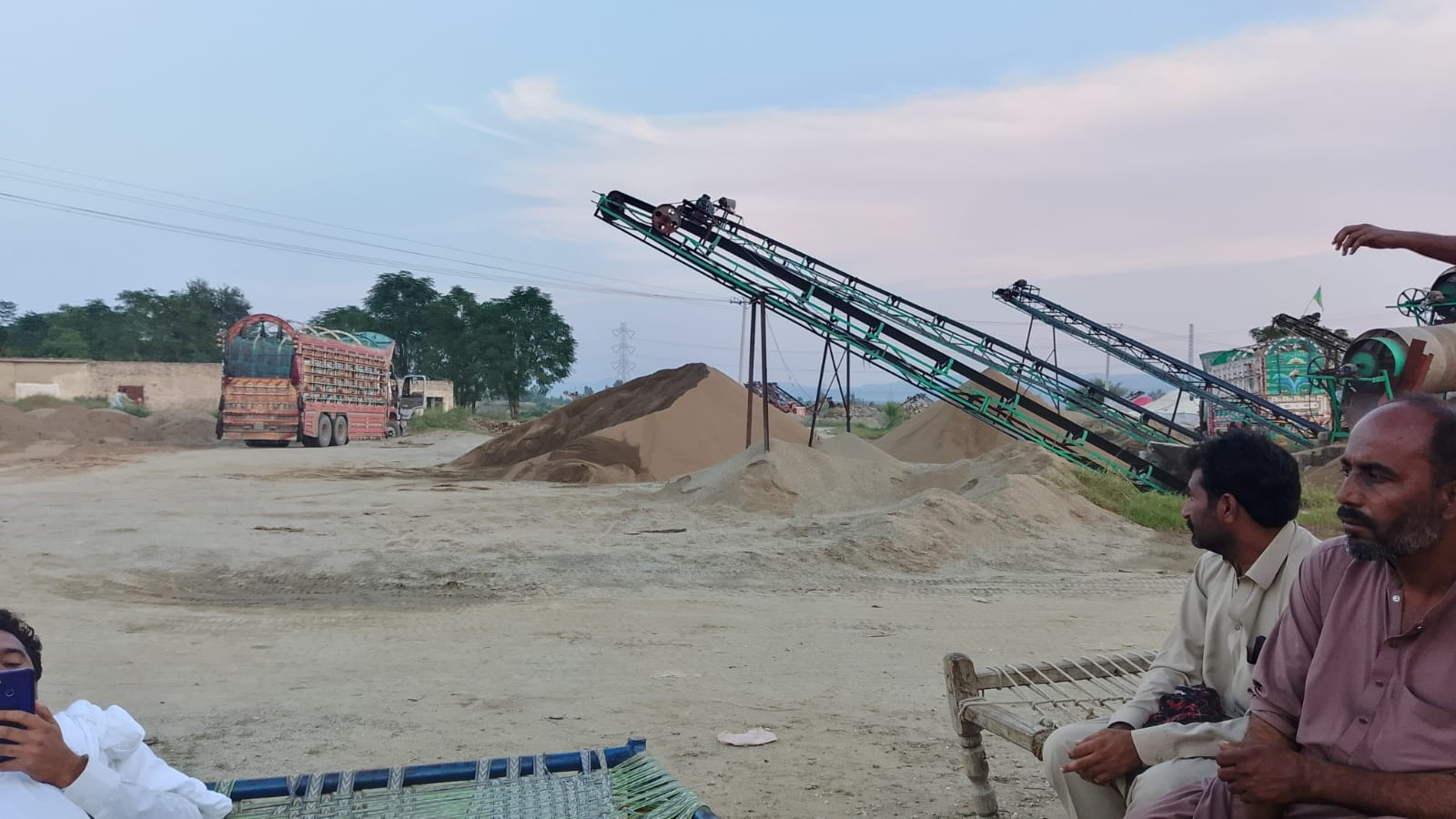
Our pea-gravel is natural pebble stone from the Lawrencepur silica sand deposit in Attock, graded at our own plants. Raw sand goes into a hopper and by conveyor to the grader, and each size is dumped from its own conveyor. Our plant laboratory runs basic tests on each batch, and you are welcome to send samples to a laboratory of your choice. Our regular customers include WASA, WAPDA and power plants. You can read more in What Is Non-Calcareous P-Gravel (Bore Wali Bajri)?
Roman Urdu mein mukhtasar
Tubewell ya borewell mein gravel packing screen aur zameen ki deewar ke darmiyan ki jagah mein saaf, gol aur graded gravel dalne ko kehte hain. Yeh pani ko aasani se guzarne deti hai aur ret ko rokti hai. Pakistan mein sab se aam size 2 mm se 8 mm hai. Tez kinare wali ya crushed construction bajri istemal na karein, kyunke yeh aapas mein phans kar pani ka rasta band kar deti hai aur casing ko nuqsan pohancha sakti hai. Gravel ki miqdar nikalne ke liye bore aur casing ke darmiyan ki ring ka volume nikalein aur 15 se 25 feesad zyada rakhein. Aakhri size borewell designer ya engineer tay karta hai.
Frequently asked questions
What size of gravel is best for a domestic borewell?
Most domestic and general tubewells in Pakistan use 2 mm to 8 mm gravel. The best size depends on the grain size of the aquifer sand, so your driller or designer should confirm it for your site.
Can I use normal river sand or construction stone for borewell packing?
No. Construction bajri is usually angular and dusty. Packing needs clean, rounded, uniformly graded gravel with no sharp edges.
How much gravel is needed for a 16 in bore with a 10 in casing?
About 0.85 cft per foot of packed length, before adding 15% to 25% for caving. Multiply by the length of the packed interval.
What happens if you do not put gravel in a borewell?
In sandy formations, the well can pump sand, the screen can clog, the pump can wear out quickly and the borehole can collapse around the casing.
Does the gravel have to be washed?
Clean gravel is important. Dust and fines can clog the pack, so gravel is normally washed before it goes into the well.
Planning a borewell or filtration project?
Tell us the bore size, depth and the gravel size you need, and we will prepare a quotation.
Request a Quote View Pea-Gravel GradesMore from the Knowledge Centre
-
Silica Sand for Sandblasting: Choosing Between 8-16, 10-20 and 30-40 Mesh
Compare 8-16 and 10-20 mesh silica sand for sandblasting: grain size, cutting speed, surface finish, dust…
-
Silica Sand Mesh Sizes Explained: Which Mesh for Sandblasting, Filtration and Granules
A plain-language guide to silica sand mesh sizes: what 4-8, 8-16, 10-20 and 16-30 mesh mean…
-
What Is Non-Calcareous P-Gravel (Bore Wali Bajri)?
Non-calcareous P-gravel, also called Bore Wali Bajri or borewell packing gravel, is natural silica gravel used…